

NEWYou can now listen to Fox News articles!
The cameras that scan your car on your commute to work have quietly become one of the most widespread surveillance tools in America.
They record vehicle sightings, feed searchable databases and, when agencies choose to share data, can connect searches across jurisdictional lines.
Recent courts have upheld the particular ALPR networks before them, but they have left open whether a denser, more revealing system could cross the constitutional line.
What are ALPRs?
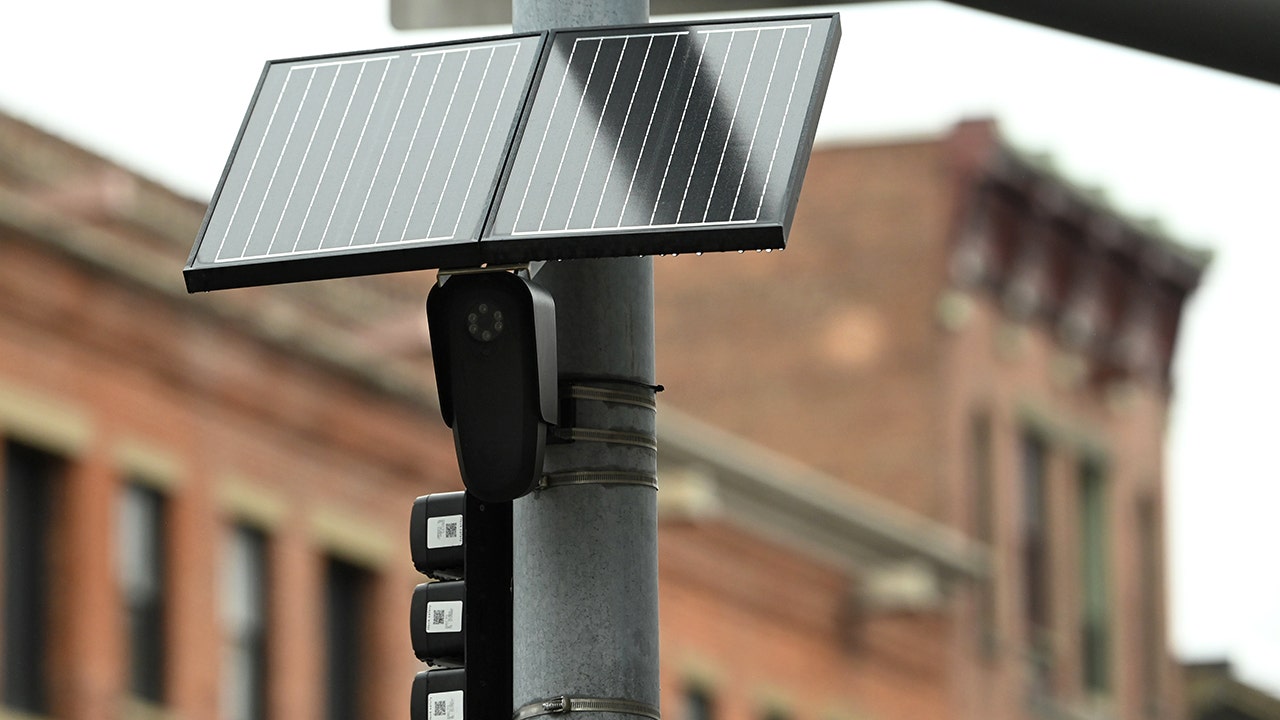
Automated license plate readers (ALPRs), which are usually small, solar-powered cameras mounted on a pole, building or police car, capture and record where tens of millions of drivers go every day. Flock Safety, one of the leading ALPR vendors, has exploded in popularity with law enforcement, municipalities and businesses in recent years.
The ACLU estimates that there are between 80,000 to 100,000 Flock cameras deployed nationwide.
Flock’s own marketing claims that it is present in more than 6,000 communities, working with more than 1,000 businesses, and more than 5,000 law enforcement agencies nationwide, resulting in billions of vehicle scans per month.
LICENSE PLATE CAMERAS AT HOME DEPOT AND LOWE’S SPARK PRIVACY FEARS
How it works:
ALPRs photograph every passing car, capturing details like license plate number, make, model, color, and other distinguishing features like roof racks, bumper stickers, and scratches to create what Flock calls a “vehicle fingerprint.”
This information is then uploaded to a searchable database that can be shared with other agencies when the owning department enables it, typically without a warrant.
Privacy concerns abound.
Privacy advocates, online creators, and concerned citizens argue that the concern isn’t any single photograph but the aggregate data. A dense, searchable, cross-jurisdictional archive, they contend, can reconstruct a person’s movements, associations and routines over time, providing a mosaic of a person’s life all without a warrant.
In a review of Flock audit logs, the Electronic Frontier Foundation reported finding searches associated with protest activity.
Advocates also point to reported misuse, including allegations that officers ran searches to track partners or acquaintances, and cases in which drivers were stopped and even held at gunpoint after an inaccurate plate scan.

But law enforcement say the tools help them solve crimes more efficiently.
Police departments and Flock counter that a license plate is displayed in public, that officers see only what any bystander can, and that the tool helps them solve crimes more efficiently.
Flock points to data retention limits, user accounts, and audit logs, and cites company data claiming its technology supports more than a million investigations a year.
What does the law say?
Courts have long held that, generally, there is no reasonable expectation of privacy of movements when traveling in an automobile on public roads and with license plate information that is exposed to public view.
WASHINGTON COURT SAYS FLOCK CAMERA IMAGES ARE PUBLIC RECORDS
In March 2026, the Fifth Circuit Court of Appeals held in United States v. Elijah Porter that police use of an LPR system did not constitute a Fourth Amendment search because the system, consisting of around ten cameras, provided only periodic information about a person’s movement, not the whole picture; the court noted the periodic nature of the information captured was “much more” limited than geofence data and cell-site location information.
In Schmidt v. City of Norfolk, a pending appeal before the Fourth Circuit Court of Appeals, two plaintiffs, one a Norfolk resident and the other a frequent commuter through the city, argued that the city’s 176 cameras — retaining 21 days of images — let police retrace residents’ movements without a warrant.
A federal judge granted summary judgment to the city, finding the camera network did not reveal enough of the plaintiffs’ movements to constitute a Fourth Amendment search but noted that at some point, ALPR surveillance technology could become intrusive enough to cross constitutional privacy lines.

Notably, building on the 2018 Carpenter decision, the Supreme Court ruled last month in Chatrie v. United States that police conduct a Fourth Amendment search when they obtain a person’s Google Location History (the record of location data that Google keeps on its users).
Though Chatrie involved cell-phone data, not license plate records, ALPR critics claim that Chatrie strengthens the argument that a searchable archive of someone’s past movements is constitutionally different from a single observation.
However, while cellphones can follow someone continuously, ALPR systems are generally fixed to a static location.
BLANCHE URGED TO INVESTIGATE ALLEGED FOREIGN INFLUENCE IN FIGHT AGAINST DATA CENTERS
Meanwhile, Rep. Tim Burchett (R-Tenn.) proposed the “Protection Against Mass Surveillance Act” this week to prohibit the federal government from purchasing or using mass tracking tools, in addition to banning states from using federal funding for the same systems.
Saying we need to “ban these dadgum” things, Burchett argues the cameras are warrantless surveillance tools that violate the Fourth Amendment, saying that Americans should never choose between safety and liberty.
Pryce Renfroe contributed to this report.
Read the full article here