

As seasons signal the waning months of 2026, the U.S. Army’s operational map continues to evolve.
New commands and force restructuring have put greater emphasis on the Western Hemisphere and Indo-Pacific, while the ongoing conflict with Iran and Ukraine’s fight against Russia have complicated the force posture in U.S. Central Command’s area of operations and what might have been a troop drawdown in Europe, respectively.
Taken together, the moves offer a snapshot of locations the Army prioritized in 2026, and where it might turn its focus next.
Western Hemisphere
In a sweeping force restructure, the Army stood up a new Western Hemisphere Command in late 2025, consolidating three major commands under a single headquarters at Fort Bragg, North Carolina. The move aligns with the 2026 National Defense Strategy, which prioritized defending the “U.S. Homeland” and the Western Hemisphere over the U.S.’s persistent goal of opposing China.
The service shuttered some of its global advisory brigades, retaining only two Security Force Assistance Brigades, or SFABs. One of the remaining SFABs is regionally aligned to U.S. Southern Command, and the Army reported that the Western Hemisphere Command would assume responsibilities previously shouldered by the Security Force Assistance Command.
U.S. Southern Command also activated Joint Task Force Western Hemisphere in August, creating a standing headquarters to coordinate regional operations with 18 partner nations and target cartels and other transnational criminal networks.
The Army also, in partnership with Panama, revived its jungle school course in the Central American country after a decades-long hiatus. Officials have said that maintaining jungle warfare skills is applicable in the Indo-Pacific region as well.
Central Command
Force posture in the Central Command area of operations — spanning the Middle East, Central and South Asia, and Northeast Africa — continues to change. In mid-April, U.S. troops shut down several American bases in Syria, handing them over to government forces and ending a 10-year presence in the country.
Last month, the U.S. formally left Iraq after more than two decades of war, spurring warnings from security experts who say the withdrawal could give Iran, its allies and the Islamic State increased freedom to operate in the country.
However, amid the U.S.’s war with Iran, the U.S. has extended an 82nd Airborne Division deployment to the region, keeping troops for a total of one year. In February, the Army announced that a brigade from the 10th Mountain Division was set to deploy to the region as well, though it did not provide a specific timeline.
Speaking broadly about the force — not just the Army — a senior U.S. official told Reuters in June that the U.S. planned to maintain its robust military presence in the region as hostilities between the U.S. and Iran persist.
Europe
In the European theater, the U.S. Army’s force posture appears to be in flux.
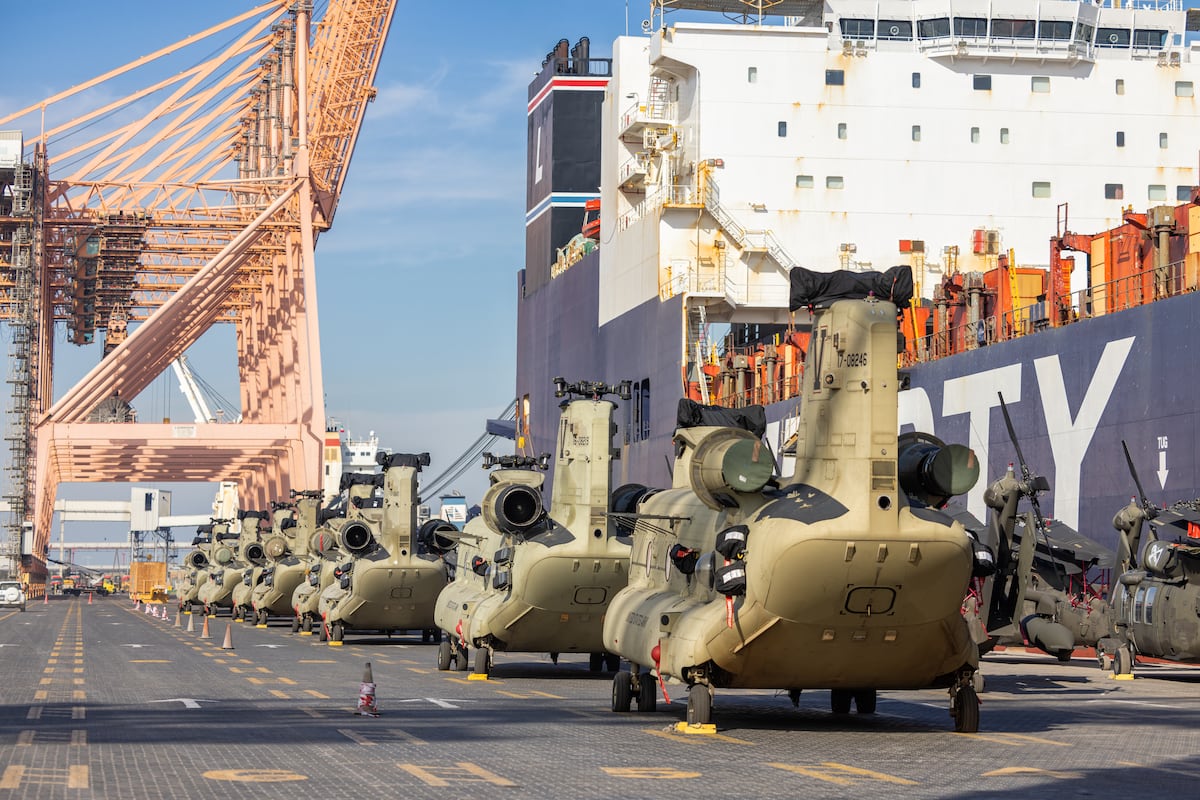
Shortly after the Army abruptly scrapped the planned deployment of the 2nd Armored Brigade Combat Team, 1st Cavalry Division, to Poland, the Pentagon announced in May it was deploying 5,000 troops to the country.
Defense Department spokesperson Sean Parnell called the surge a “temporary delay” of the Trump administration’s plan to reduce the number of Brigade Combat Teams assigned to Europe from four to three.
This summer, the Pentagon launched a broad review of U.S. troops, bases and force posture across Europe. The review, which is expected to take up to six months, comes after the Trump administration’s calls for European countries to take on heftier NATO defense responsibilities.
Still, the Army continues to participate in multinational training exercises in Europe, like Dynamic Front 2026 and Exercise Saber Junction.
Europe’s theater has been particularly rife with lessons about drone warfare. Maj. Gen. Christopher Norrie, the acting Commanding General of U.S. Army Europe and Africa, said in a September briefing that troops rotated through the Army’s “training support mission” in Ukraine’s capital to learn about drone units.
Indo-Pacific
Deterrence appeared to define the Indo-Pacific theater in 2026.
“In the big scheme of things, our highest duty is to deter,” Gen. Ronald Clark, commander of U.S. Army Pacific, told Military Times in an interview.
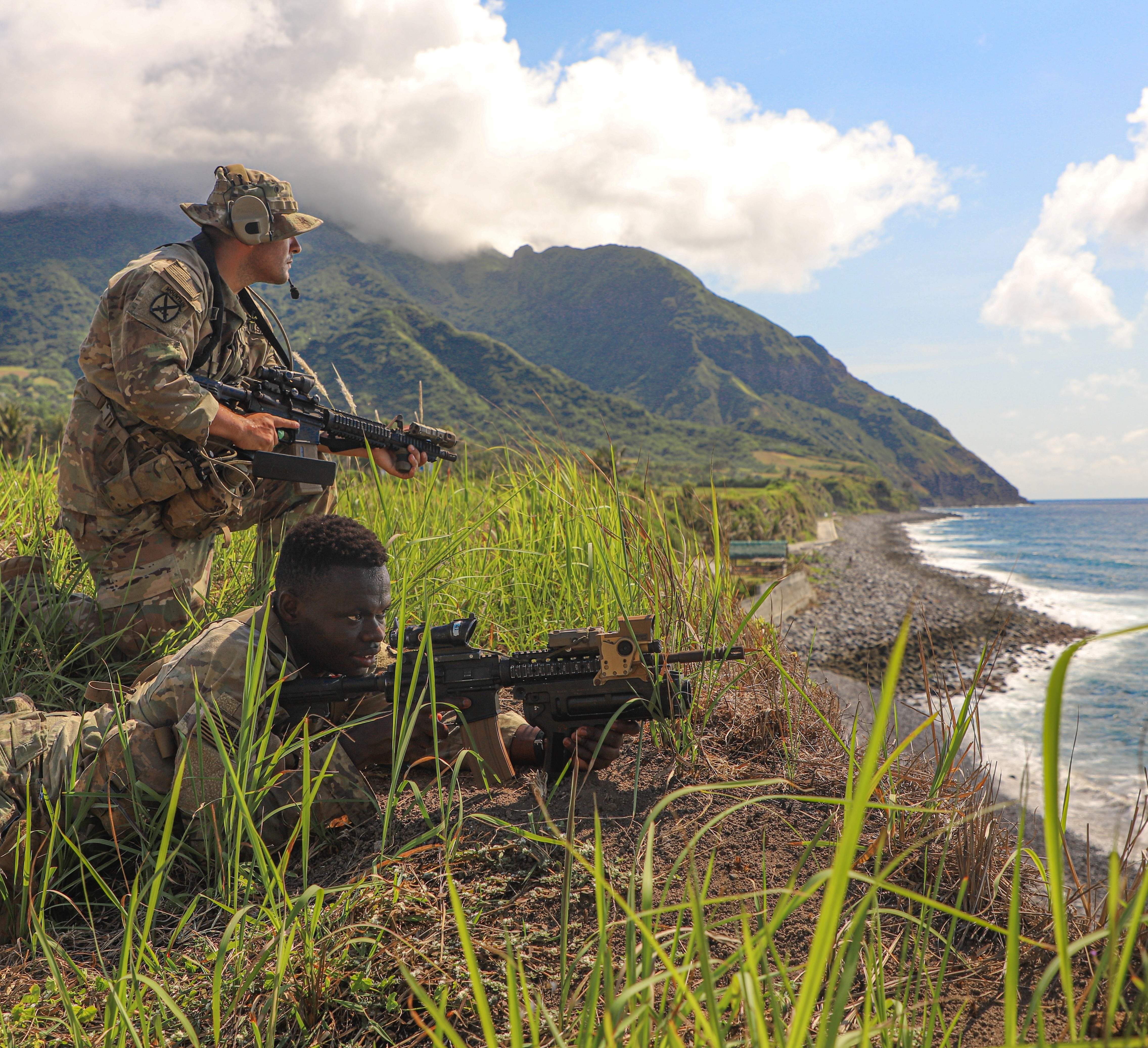
Earlier in the year, Exercise Balikatan 2026 — the largest drill of the series yet — was held in the Philippines and included troops from the Philippines, the U.S., Australia, Canada, France, Japan and New Zealand. The exercise’s focus, Clark said, had shifted over the years from counterterrorism to “large-scale combat operations.”
Though Chinese leader Xi Jinping ordered troops to seize Taiwan by 2027, the outlying island is conspicuously absent from the 2026 National Defense Strategy.
In June, the Army launched a new Indo-Pacific multi-domain command that brought together conventional forces and the Cross Domain Contact Layer, a continuous network that combines sensors, drones, precision weapons, artificial intelligence, electronic warfare and more.
According to a May 2025 executive order, the Army plans to create four such commands, including one Multi-Domain Command—Japan.
Africa
The Army has reduced some of its Africa-focused force structure, shuttering the 2nd Security Force Assistance Brigade, previously aligned with U.S. Africa Command, late last year.
The command has seen a 75% force drawdown in the last ten years, creating what Gen. Dagvin Anderson, the command’s top leader, described in testimony before Congress as “an intelligence black hole,” and said the organization was operating with “minimum necessary resources.”
The U.S. special operations task force in Somalia posted an ad for three cultural and political advisors in late May.
The Arctic
The Marine Corps announced this year that it is moving troops deeper into Alaska with an initiative — aptly called “Campaign – Alaska” — designed to build a more persistent presence in the Arctic and prepare service members for extreme cold-weather operations.
The new rotating force will train and experiment in the frigid conditions and will likely add to interservice operations and exercises with partners like the Army’s Alaska-based 11th Airborne Division.
While the Army announced no major force posture changes in Alaska or the Arctic, the Army Corps of Engineers is working to expand where troops can operate in the region.
Researchers are developing new standards for landing Black Hawks and Chinooks on frozen lakes after testing found that aircraft could land on thinner ice than previous Army doctrine allowed, possibly opening up 25% more terrain for aviation operations.
Eve Sampson is a reporter and former Army officer. She has covered conflict across the world, writing for The New York Times, The Washington Post and The Associated Press.
Read the full article here